AI Business Automation in India: What SMBs Should Automate in 2027
AI automation is no longer experimental for Indian SMBs. These are the five workflows worth automating first in 2027 — and the mistakes that waste money.
The 2027 reality: automation is table stakes
Two years ago "AI automation" meant chatbots that frustrated customers. In 2027 it means deterministic workflows — rules and AI working together — that quietly handle the repetitive 60% of office work: data entry, follow-up reminders, invoice chasing, lead routing, and report generation.
The businesses pulling ahead are not the ones with the fanciest AI. They are the ones that removed the most manual steps between "lead comes in" and "money lands in the bank."
The five automations worth building first
If you only automate five things, automate these:
- Lead capture to CRM — forms, WhatsApp messages, and walk-ins flowing into one pipeline automatically, with duplicate detection.
- Instant lead response — WhatsApp or email acknowledgement within seconds, with qualification questions, while a human sleeps.
- Follow-up sequences — automated reminders for quotes, payments, and renewals based on where each lead sits in your pipeline.
- Invoice and payment reconciliation — invoices generated on order confirmation, payment webhooks updating records automatically.
- Daily operations digest — a morning WhatsApp or email summary of yesterday’s sales, stock movements, and pending approvals.
Where AI actually helps — and where it does not
Use AI where judgement is fuzzy: qualifying leads from messy messages, drafting replies in your brand voice, extracting data from invoices and photos of documents, flagging unusual orders or stock movements.
Do not use AI where correctness is binary: stock levels, payment records, tax calculations, and permissions. Those need deterministic rules — AI can suggest, but systems of record must be exact.
The WhatsApp advantage Indian businesses keep ignoring
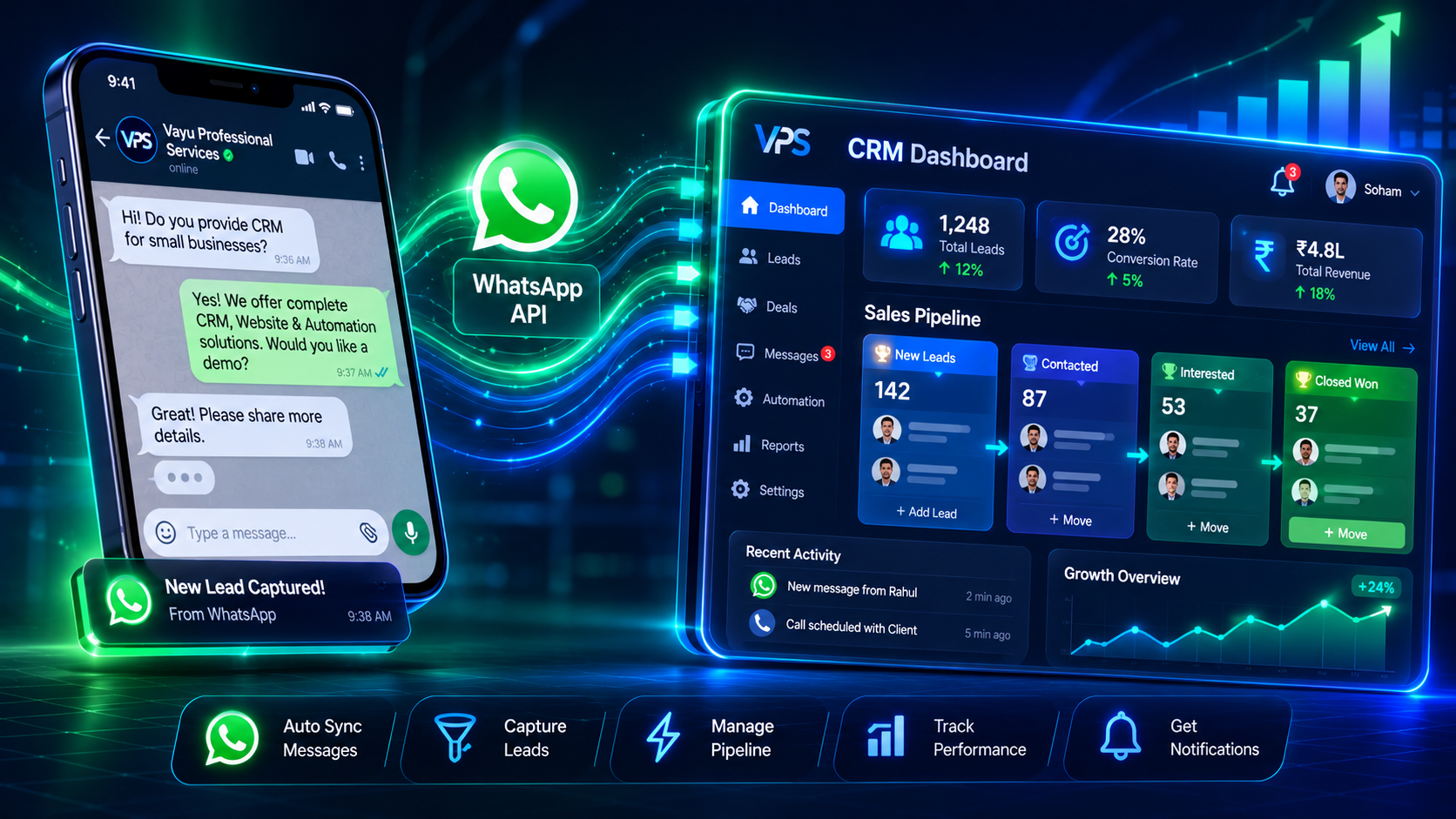
Your customers already live on WhatsApp. The official WhatsApp Business API lets you send order updates, payment reminders, and support replies inside that same app — with delivery receipts, templates, and webhook-driven automation — without staff touching their personal phones.
Paired with your CRM, this closes the loop: lead comes in on WhatsApp, gets qualified automatically, lands in the pipeline, and receives follow-ups on the same channel — all logged, all compliant.
What a realistic automation roadmap looks like
Week 1–2: map where time actually leaks — interview the people doing the work, not just the owner.
Week 3–4: ship one visible win (usually lead response or follow-up automation) so the team feels the difference.
Month 2–3: layer in the deeper integrations — payments, inventory, reporting.
Ongoing: review automation metrics monthly; retire rules that no longer match how the business works.
Mistakes that burn money
- Automating a broken process — fix the spreadsheet chaos first, then automate it.
- Buying a "AI platform" subscription before defining the workflow it should run.
- Ignoring adoption — automation your team routes around is worse than none.
- No owner — every automation needs one person accountable for its rules and exceptions.
Frequently asked questions
What can AI automation do for a small business in India?
The highest-impact uses in 2027 are instant lead response on WhatsApp, automated follow-up sequences, invoice and payment reconciliation, document data extraction, and daily operations summaries — all integrated with your CRM.
Is AI automation expensive for SMBs?
Not anymore. Deterministic workflow automation integrated into a custom system typically costs a fraction of generic AI platform subscriptions — and because it runs on infrastructure you own, there are no per-seat or per-message platform fees beyond API usage.
Do I need technical knowledge to automate my business?
No. You describe the workflow in plain language; the build handles schemas, APIs, and webhooks. Your job is to define the rules — the system does the rest.
Will automation replace my staff?
It replaces repetitive tasks, not people. The goal is removing data entry, chasing, and manual reporting so your team spends time on customers and decisions only humans can make.
Building something like this?
Tell us how your business works — we'll design the system around it in a fixed-scope sprint.
Book a free architecture call